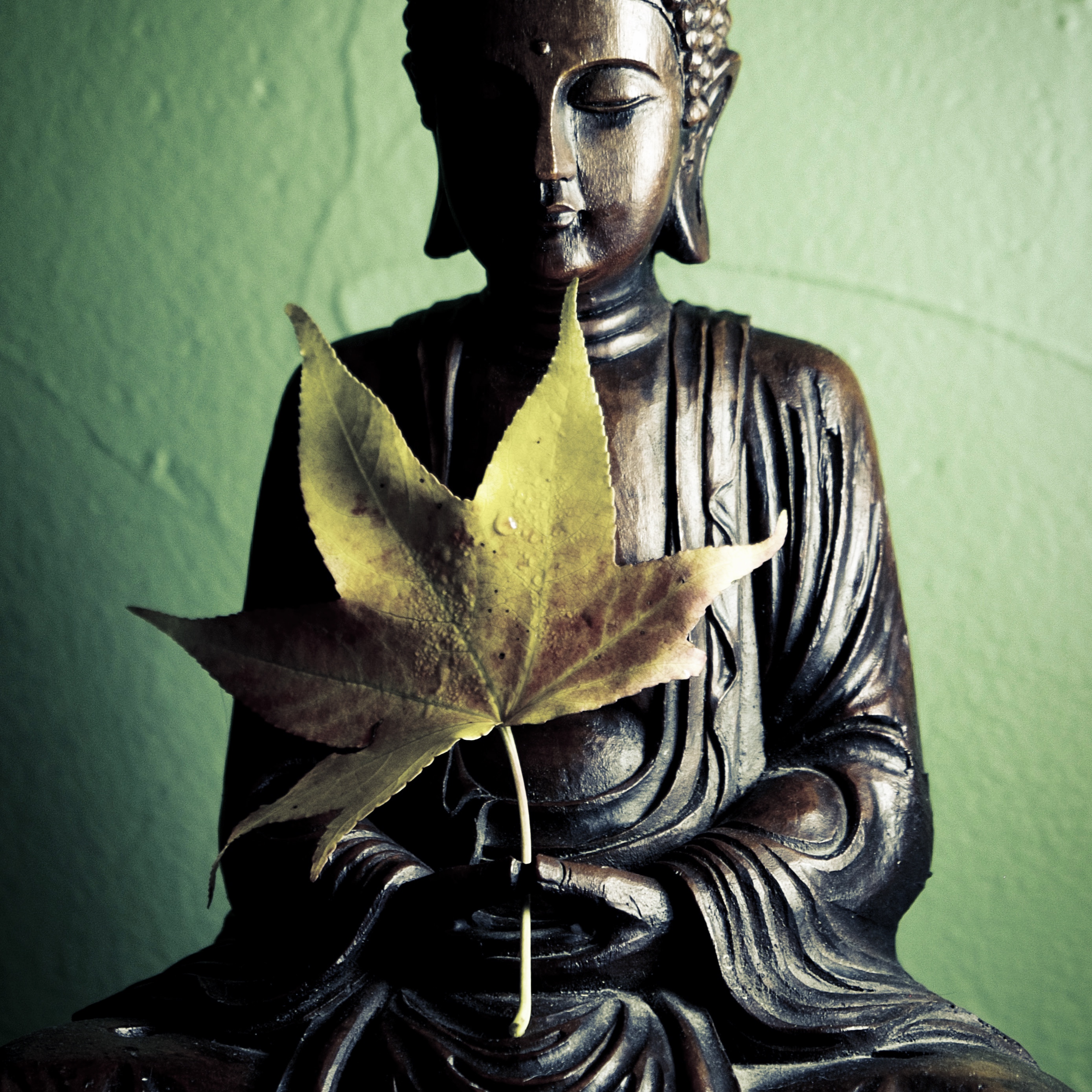
When touched by pain or discomfort, the unaware person is likely to become distraught, anxious, and self-critical. Now she feels two pains, the original one and the pain of the newly added mental overlay. It’s as if someone shot by an arrow were to respond by shooting herself with another arrow, thereby transforming pain into full blown suffering. Beware the second arrow. — paraphrase of the Buddha
Over the years, there have been moments when I’ve wondered if my decades-long spiritual journey has all been a big waste. At such times of overwhelm, it’s as if I’ve been half-asleep, so identified with the fact of my own discomfort or pain that I could find no breath between one thought and another, no space between me and my rampaging mind. The trigger might have been something small, a nagging ache in my knee or an interaction with someone that I experienced as rude. Or maybe it was something larger and more piercing like a loved one’s apparent rejection or the death of a friend. But whether it has felt big or small to me — be it a stubbed toe or a blinding concussion — the lessons have been more or less the same. And they have served me so well that, in a way, I almost (but not quite) find myself looking forward to new incursions of pain or discomfort. As perverse as this sounds, it’s really just a reflection of the fact that nothing has revealed me to myself with such crystalline clarity as my changing relationship to discomfort and pain.
The first lesson is perhaps the most important and most obvious: that I am, as a matter of undeniable fact, much stronger than I used to believe myself to be. Indeed, for decades I performed my life against a shimmering backdrop of worry and anxiety, ruminating about the glitches or harm that might arise, and diligently (I thought) crafting response plans. And it wasn’t simply that I was worrying about how to cope with actual objective challenges. No, it is that I often doubted my own capacity to emotionally handle the inevitable difficulties or griefs that might land in my path. In fact, when I wasn’t indulging in escapism (of one form or another), I frequently over-prepared on the logistical front, amassing more and more “security” and creating all sorts of contingency plans. It was all part of a desperate effort to ease the nagging fear that I simply did not have the wherewithal to live in such a difficult world. Consequently, I often felt like I needed to try to manipulate my environment in a bid to keep myself as safe as possible.
Of course, I grossly underestimated myself. As various difficulties and anguishes of life landed in my lap over many years, it became impossible to maintain the lie that I was somehow so damaged or remedial that I was incapable of meeting life on its own terms. That I (eventually) got back up after every perceived inconvenience, blow, or injury — many, it must be said, of my own making — made it impossible to delude myself about my own impressive resilience. At some point, I simply had to accept that I had, by and large, become a pretty solid and well adjusted adult, someone who could more or less happily get on with life come what may. To be sure, it is not that I somehow became less sensitive to discomfort and pain. Nope. I haven’t “transcended” my humanity by one whit.
Rather, it’s that, through acceptance, I began to incorporate challenging emotions into my sense of self rather than handling them as if they were a threat to my very identity. Now when I feel discomfort and pain, it does not necessarily bother me that I feel this way. The upshot? The less I habitually add dread and resistance to the basically innocent sensation of pain, the clearer it becomes that pain is not a problem. In other words, once I stopped adding the second arrow every goddamn time, I simply had to admit that I could cohabitate pretty peacefully with the normal discomfort and pains of life, at least most of the time.

One obvious result of all this is that the elimination of discomfort and pain is no longer the primary goal of my spiritual work. This will, I know, sound a little odd to some folks. I mean, doesn’t the Buddha repeatedly insist that he teaches only one thing: about suffering and how to end it? Yeah, sure, and I think it was my own focus on lines like this that had me chasing my own spiritual tail far longer than necessary. For although I never explicitly formulated the thought, deep down I believed that the fact that I continued to experience discomfort and pain meant that I was doing spirituality wrong.
My ongoing dis-ease with life became proof to me either that I was such a failure I might as well give up on spirituality, or, alternately, that I needed to beat myself into greater spiritual submission, to work even harder to meet the supposed goal of transcending pain. But, as usual, the genuinely skillful response is to be found on the middle way. And it’s expressed in a slogan so ubiquitous that we should probably regard it either as a mere truism to be cast aside or as the very pinnacle of earthly wisdom: Pain is inevitable, but suffering is optional.
If you’d like to be notified of new posts by email, hit the menu button above to find the subscribe link.
 OtherWise Philosophy
Okay. Love love love. And like. Thank you, Ms. Cathryn!
LikeLike