“Because of your smile, you make life more beautiful.”—Thich Nhat Hanh
“If people have lost their laughter, there is only one reason: they are at the peak of ignorance, have lost sense of life.” —Sadhguru
Existentialism is the philosophical school that deserves credit for popularizing “absurdity” as a Very Serious Concept in the West. Although they were, themselves, trained philosophers, European bad boys like Sartre and Camus mocked philosophy as it had been taught to them, as if it were an earnest classmate who’d shown up with jeans pressed and too-shiny shoes. Those of us who learned about “absurdity” through such famous 20th century Existentialists will be inclined to interpret it in brooding, beard-tugging terms: “There is no ultimate meaning to it all.” Oh my! “There is no God standing backstage, directing the players or minding the curtain.” How shall I bear it?! “Human reason is not a North Star leading us to Truth.” Why bother getting out of bed?! The reputation of this iteration of Existentialism—despite some of its adherents’ efforts to rehabilitate it—skews dark and joyless. Life may be a joke, it suggests, but the joke either wasn’t very funny in the first place or is one that humans are ill-equipped to comprehend. This take on “absurdity,” then, definitely didn’t inspire more goofy grins or spontaneous belly laughter. To the contrary, it helped cement the notion that genuinely deep thinkers are earnest and morose.
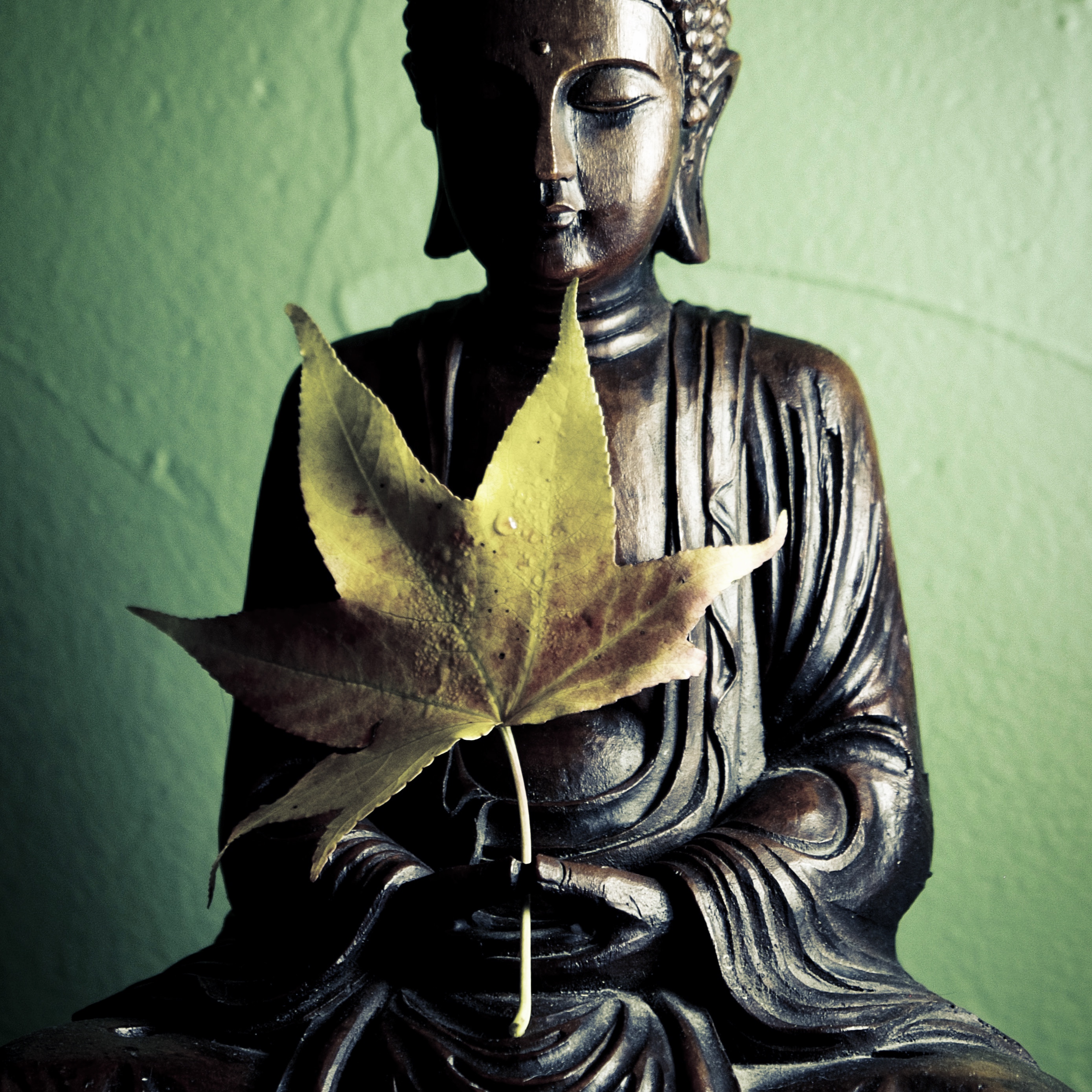
By contrast, there are non-Western/Eurocentric versions of this concept that appear variously in indigenous, Zen, Taoism, and East Indian traditions. Here the likely image is of the master who goes around smiling, burbling over with laughter for no apparent reason. This is the “crazy wisdom” guru whose yet-to-be-enlightened students struggle to decide if their teacher is merely delusional, or guided by esoteric knowledge and insight that they themselves lack. Indeed, it is the master’s inclination to laugh in situations that frustrate or anger supposedly ordinary others that helps identify her as a master in the first place. Not surprisingly, many Western renderings of such stories reek of exoticism. The simple fact that such individuals laugh while most everyone else is inclined to wail or gnash their teeth may be a mark of mystery and specialness, but, from a Eurocentric perspective, it also suggests extreme otherness, hinting at such individuals’ apparent lack of rationality and worldly competence.
I think about laughter and absurdity on this rainy morning after waking in the night with the comedian Kate McKinnon on my mind. I recall laying in bed at two a.m. or so mentally replaying that SNL bit where she recounts being taken up by a UFO and inspected by aliens, a classic I’ve watched a million times. While this is probably not the sort of thinking, that, as a philosopher, I should be proud of, it thrills me to rise into nocturnal consciousness imbued in hilarity rather than ponderous reflection upon Very Deep Concepts. Even if it is true that, for many of us, the path to greater spiritual awakening requires self-analysis, luck, and hard work—both cognitive and emotional—laughter’s starring role is clearer than ever to me now. It functions as a balm, and also as evidence to me that I am encountering aspects of reality—the intrinsic absurdity threaded through it all—from a more accurate and accepting perspective. In fact, these days, it is my capacity and inclination to smile and laugh—sometimes even in the midst of my most earnest navel-gazing—that I think best indicates to me the health of my spiritual journey. Even so, this aspirational identity I’ve been cultivating—as a big-bellied laughing Buddha—is scarred and stained by my intellectual training and by other aspects of my personal history.
I mean, even as I love to smile and laugh, and as I increasingly arrange my life around lightheartedness and laughter, I still hate it when people imply that I’m too intense or serious. And I can still easily access twinges of irritation when others, particularly men, particularly white men, suggest that I smile more. This, by the way, still happens from time to time, despite the fact that I’m well into the life phase where sexism and ageism should have, I had imagined, guaranteed my invisibility. What such critics have wanted—it has seemed to me—is that I be a more agreeable element in their own philosophizing tableau. Telling me to smile hasn’t been a contradiction of the view that life is a Very Serious Matter meant to be brooded over, but, rather, a way of highlighting that it wasn’t my place to engage in such speculation and argument. Like so many girls and women, and men of color, I was reminded early and often that I wasn’t meant to be a legitimate philosophizing subject, that to whatever degree I held that role, it was almost as a novelty. When I have been encouraged to smile and “lighten up” ove the years, then, it’s been almost indistinguishable to me from those annoying assurances of how attractive I could be, you know, if I just wore a little more makeup.
Certainly, I have felt drawn to crazy-wise, joyful, teachers—both women and men—who smile constantly and from whom laughter pours like wine. But I have resisted giving up my own claim to being a Very Serious Person. I mean, it’s kind of my thing, this identity as an old-soul, nostalgic world weary traveler observing and theorizing from the sidelines. And I think it’s also been a mark of my queerness and rebellion to have insisted on existing from time to time as a Very Serious Subject in a world that has sometimes seemed determined to reduce me to mere object. As much as I am drawn to laughter, then, this is one small way I participate in and reflect the absurdity of the social and historical moment I have been thrown into: I challenge the supposed authorities who attempt to define for me what life ultimately means or how I should respond to it.
This works well enough for me, in part, because I hear “life is absurd”to be primarily a claim about the limits of human knowledge. That is, as less an assertion that life is, in fact, meaninglessness than a reminder that human beings’ tiny concepts can’t possibly capture the boundless plenitude of reality, however it exists in and of itself. I’ll keep sharing my bed with laughter, then, but also embrace the Very Serious Spiritual Seeker in me for as long as I am inclined to do so. Whatever else I have learned over the years—from the tobacco-stained philosophers, the laughing buddhas and the side-splittingly funny women who populate my nocturnal fantasies—I know that reality is so absurd and expansive there is plenty of room for it all.
If you’d like to be notified by email of new posts, hit the menu button above to find the link to subscribe.
 OtherWise Philosophy