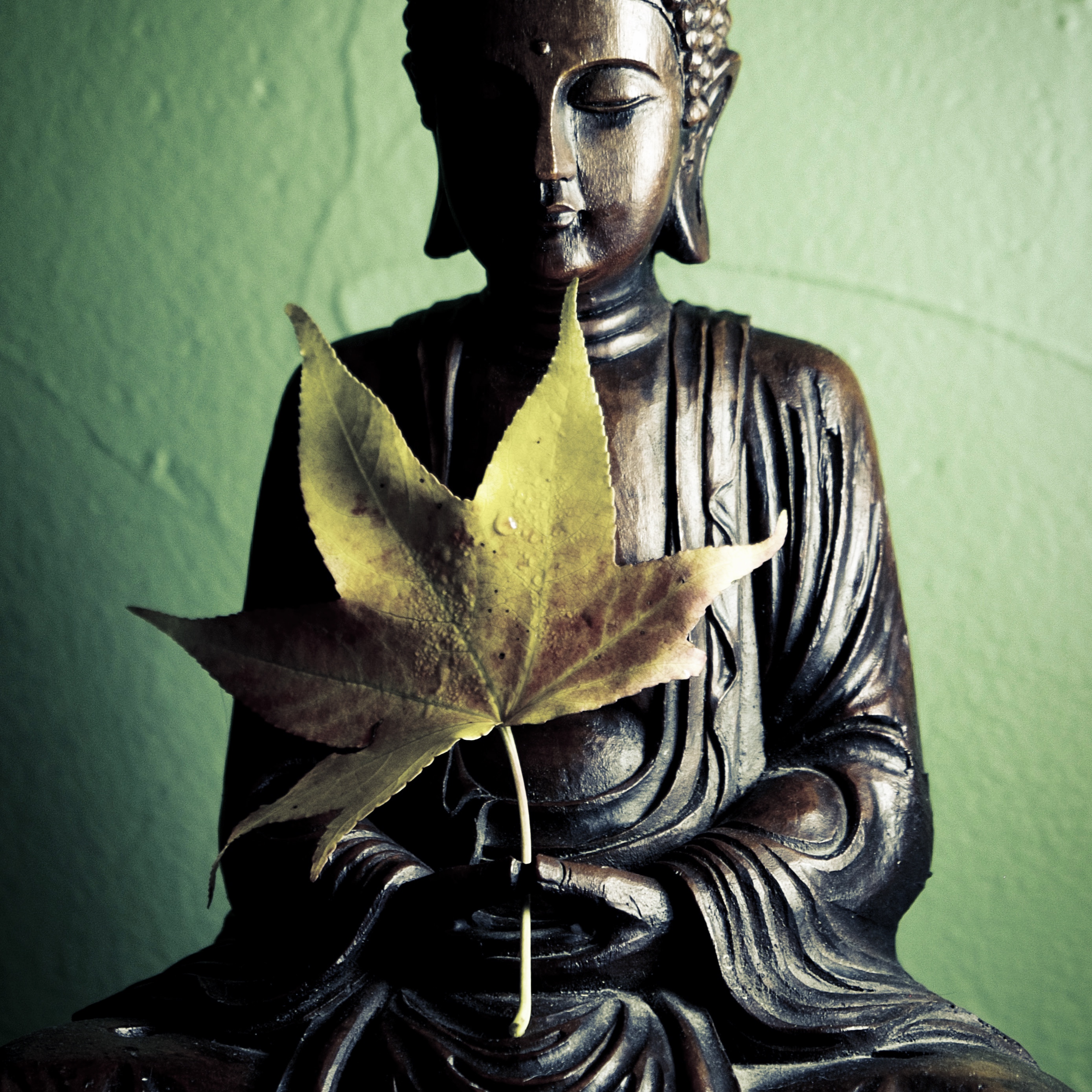
When new acquaintances learn that I am into Eastern spiritual philosophies and practices, there’s a good chance that, pretty early on, they will spontaneously confess to me that they’re a bad meditator. “I’ve tried it,” they might say, “but my mind is just too active.” Or, despite the fact that I haven’t asked about this, they’ll explain that their erratic schedule or a lack of privacy at home keeps them from making good on this longstanding ambition. “I wish I could meditate,” they might wistfully say. Although small percentage of folks probably are constitutionally incapable of meditating, there are, I think, some interesting explanations for why so very many of us are eager to believe and advertise the almost-certainly-false belief that we just can’t do it. And this myth-of-the-bad-meditator holds us back, not so much because sitting meditation is intrinsically necessary for spiritual development—I don’t think it is—but because it functions as an excuse that leads to greater ego attachment (which does impede spiritual development). Further, this myth helps disguise the fact that, in reality, most of us actually are capable of deeply committing to a practice of focusing our attention when it suits us to do so.

One irony is that, in believing and asserting that we are the worst ever when it comes to meditation, we’re actually marking ourselves as special, albeit, especially bad. Self-effacement and self-importance, then, function as two sides of the same coin in that both are an assertions that we are not like other people. And, no surprise, it is deeply satisfying to the ego to believe that I am somehow fundamentally different from those others—those who are apparently able to sit and meditate—even if feelings of shame and inadequacy are a byproduct of this belief. It’s one of the most insidious qualities of the ego, I think, that it will cast about, and grab onto, almost any confirmation of one’s own specialness. This specialness might be “positive,” say, self-talk that references one’s own superior intelligence or appearance, or “negative,” pointing to how impatient, unloveable, or utterly damaged one supposedly is when compared to others. That our own spiritual development is also likely to figure into this egoic game is a stumbling block for many because self-narratives of oneself as a spiritual virtuoso or bumbler also feeds the ego’s appetite.
In addition, the myth-of-the-bad-meditator helps perpetuate the greatest lie of all about meditation, that it’s an activity undertaken primarily—or maybe even solely— when one is sitting cross-legged on the floor. In reality, this is probably the rarest form of meditation even if it is the iconic version. In fact, any time we train our attention in a particular direction—be it on a video game or thoughts of unworthiness—we can be said to be meditating in some sense. Whenever we focus on our thoughts, be they “negative” or “positive,” this can be understood as a species of meditation, albeit usually not a very salubrious one. Indeed, this is, by far, the most popular form of “meditation,” and most of us engage it in with extraordinary dedication for the greatest portion of our lives. From the moment we awaken and until we fall back into exhausted sleep, we glue our consciousness to whatever thoughts pass through: what we should do, what we shouldn’t have done, what others should do, what others shouldn’t have done. We may feel some relief when we develop the discipline of positive thinking, a version of “meditation” that some of us get very good at and that can alleviate some suffering.

Maybe the question should be, then, not whether or not one is capable of meditation, for most all of us are already doing it most of the time, but, rather: “What is it that I wish to meditate upon? Will I continue to focus on thoughts about how awful or awesome I am? Would I, instead, prefer to attend to my breath, a mantra, or the sensations arising in my body? Or, will I, perhaps, direct my conscious awareness to the source of conscious awareness itself?” To be clear, I’m not saying there’s a “right” answer here. As far as I can tell, whatever one opts for is fine from a moral and spiritual point of view. How one chooses to recognize and exercise one’s powers of awareness, thought, and attention is a decision at the very heart of human autonomy and self-determination. It’s a MYOB zone. But there are, of course, practical considerations, and whether and how one suffers—say, whether one ultimately feels powerful or victimized, whole or damaged—will hinge on the kind of meditation practice one chooses. We must be ready to pay a price, then, when we embark on a richly spiritual meditation practice. For we will ultimately be called to dis-identify from something that has, for many of us, come to feel utterly necessary to who we are—the reliable, precious, tender ache of our own suffering.
If you’d like to be notified by email of new posts, hit the menu button above to find the link to subscribe.
 OtherWise Philosophy