As supposed concerns about fair competition provided an excuse for scrutinizing and (with casual cruelty) assessing Imane Khelif’s embodiment of femininity, the Olympic boxer became even more of a public spectacle than such powerful women athletes usually do. The most ignorant commentators assert an atavistic, counter factual attachment to binary essentialism—“men are men and women are women.” Progressives, for their part, sometimes end up arguing against such (actual and willful) ignorance by inadvertently appealing to similarly essentialist identity tropes. One thing that’s clear is that most all of us are expected to remain faithful to identity commitments that may not be organically or intimately tied to us, at least not consistently, even if/as they are personally, socially, or politically significant. For me, this latest ill-conceived international “conversation” about sex and gender feels like an invitation to revisit my own happily uneasy orientation to identity in general, something that, as far as I can tell, most others seem to take for granted.
As a way of beginning, I’ll share that I’ve off-and-on had the ability to pass—and sometimes quite well—as different sex/genders. My life began unremarkably enough. I was what I was “supposed to be”—a little girl and then a young woman. But suddenly, after one quick haircut as a young adult, it became utterly clear that, unless I made an actual effort to recostume, I would now be taken variously as a young man, a gay man, or as a butch dyke. Because this shift could be so abrupt—it only ever took a haircut and loose-ish clothes—I’ve long felt close to the knowledge of how accidental, tenuous, and superficial gender identity might be. So when I first found women’s studies and later read Judith Butler’s Gender Trouble, much of it felt intuitive to me: Yes, of course, there were performances and constructions going on here. How else could I, from one moment to the next, be basking in heteronormative privilege and overtly sexualized by hetero men in all the usual ways to being called “faggot” or directed to the men’s bathroom?
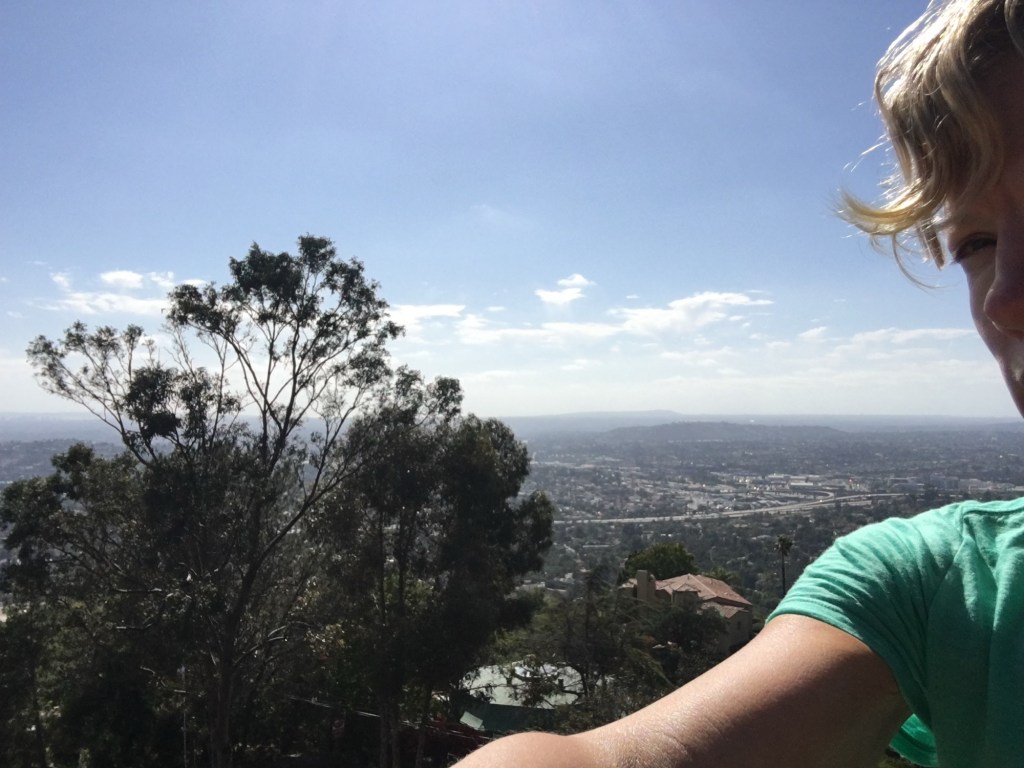
When, as a young adult, I first got my very long hair cut very short, I got a crash course in how arbitrary and accidental identity could be. I’m not, to be sure, saying that gender identity works like this for everyone else—in fact, I think that, for many, it does not—I’m just describing my own experience. And, to clarify, I’ve never felt like I’ve been faking or lying as I’ve moved between these ways of presenting. Nor, however, have I ever had any deep or abiding sense of resonance with any of them. And I should also say that I don’t think there’s anything special about my ability to “pass.” I’m not especially biologically or morphologically interesting, including when it comes to sex/gender markers or expression. I think it’s mainly just that, at various points along the way, I embraced this experiment and I had the privilege and wherewithal to do so.
This long, off-and-on identity experiment has had momentous results for me, especially as I began to take seriously various philosophical accounts of identity, particularly Buddhist ones. It’s meant that, even if I was being treated like a heteronormatively attractive, presumably heterosexual woman, I could never take any of it too seriously. Nor have I ever felt that any of the light trappings of femininity that I’ve been willing to (provisionally) adopt have reflected anything deep or authentic about me even if/as I got positive feedback for doing that stuff. But I also haven’t felt like I was being “truly seen”—by others or by myself in the mirror—when I showed up short-haired and big booted, as likely to be taken as a teen-aged boy, a young gay man, or a dyke. Since that first major haircut—the first time I sort of unwittingly gave up being that “girl with the long blond hair”—I’ve never been able to unknow how tenuous my hold on gender identity is, and this has been my experiential gateway into questioning the nature of other aspects of identity. From the perch of feeling that I was not “really” any gender or sex, it was pretty easy to imagine other aspects of my identity too as a kind of performance, relatively important, sure, but ultimately quite superficial. Just as I know that I am not REALLY a woman (and certainly not a man, or nonbinary, or anything of the sort), so too I know that I am not really a Midwesterner or a professor, or even a human being.

But before anyone offers me sympathy or, worse, some sort of gender validation—there are always some who seem eager to do this, frequently with transphobic results—let me be clear that I’m not seeking “support” for having been wrongly gendered or misunderstood, or whatever. Yes, sure, like lots of people, I have been in uncomfortable situations as a result of others’ perceptions and judgments about me. And it’s no fun to be treated disrespectfully, whether this is because men think you’re a heterosexually available thingamajig or because they’ve decided you’re a homo and, gosh, they really hate the gays.
And, while I’m at it, a few more caveats: It’s partly because I’ve been on the receiving end of plenty of garden variety sexual harassment and a fair bit of heterosexist denigration that I have felt especially attached to women and to queer people, affinities that are a source of pride and joy to me. I’ve also been shaped by my awareness that my privilege—especially my whiteness, cis-ness, and, later, social and economic class—has afforded me the luxury of noticing some of the knots and contradictions along the way with curiosity, rather than merely resenting them. Only rarely have I wondered if my livelihood, or perhaps even my very life, might depend on my gender/sex/sexuality commitments or performances. So I continue to fight for social justice rooted in “identity politics”—is there is any other kind of politics?—even as I permit myself to feel, and sometimes even to celebrate, the looseness of some of my own identity ties.
Partly because I’ve had the inclination and space to play in the identity arena, adapting to Eastern notions of identity has been relatively easy for me. And partly because I have been a professional philosopher—I’ve worked with thousands of students in the classroom—I know that most people, even most thoughtful people, take their “basic” identity commitments for granted. So much so that they may not even be able to imaginatively countenance that they are not who others think or see them to be, and not even who they themselves think or see themselves to be.
Because, early on, I was dramatically confronted by the reality that I was actively participating in the construction of my identity—as a woman or man, or straight person or queer—it hasn’t been as hard for me to see that I am performing similarly in other roles as well, for instance, as a writer, an academic, and, these days, as an outdoorsy Michigander. But I am also sometimes able to imaginatively squirm my way even out of supposedly “deeper identities,” for instance, my human guise. And even though I love doing the human thing—and I am committed to making the most of it—there are times when I can feel my consciousness fall back, like the tide retreating from the shore. And then I make brief contact with a truth that is both more elusive and more obvious: It’s not that I’m none of these things that I and others think I am, but that I am all of them all at once.
If you’d like to be notified by email of new posts, hit the menu button above to find the link to subscribe.
 OtherWise Philosophy